
Last updated September 25, 2026
Free written scope consultation - allowances, timeline, and change-order rules on paper before a single trade is scheduled





 Before
 After
After Before
 After
After Before
 After
AfterHow to Hire a Construction Contractor in Pompano Beach: A Step-by-Step Guide
Florida’s Construction Industry Licensing Board shows that Broward County generated more contractor-license complaints per capita than any other South Florida county in 2022, and the majority of those complaints came from projects where the homeowner never verified the license number before signing a contract. In Pompano Beach, where the coastal humidity, salt-air exposure, and active building department create specific code requirements, that verification gap costs homeowners more than just money. This guide turns the document-collection process into a step-by-step checklist you can run in under thirty minutes, before you let anyone onto your property for a walk-through, and complements our Complete Guide to Construction in Pompano Beach.
Quick Answer
Hiring a construction contractor in Pompano Beach requires verifying three documents before any work starts: a valid DBPR-issued license matching the scope of work, a current certificate of insurance with minimum $1 million per occurrence general liability, and a signed contract that references Florida Statute 489.126 change-order requirements. Run the license number through the DBPR online lookup, call the insurance carrier to confirm active coverage, and never accept a verbal change order, no matter how small the adjustment.
Table of Contents
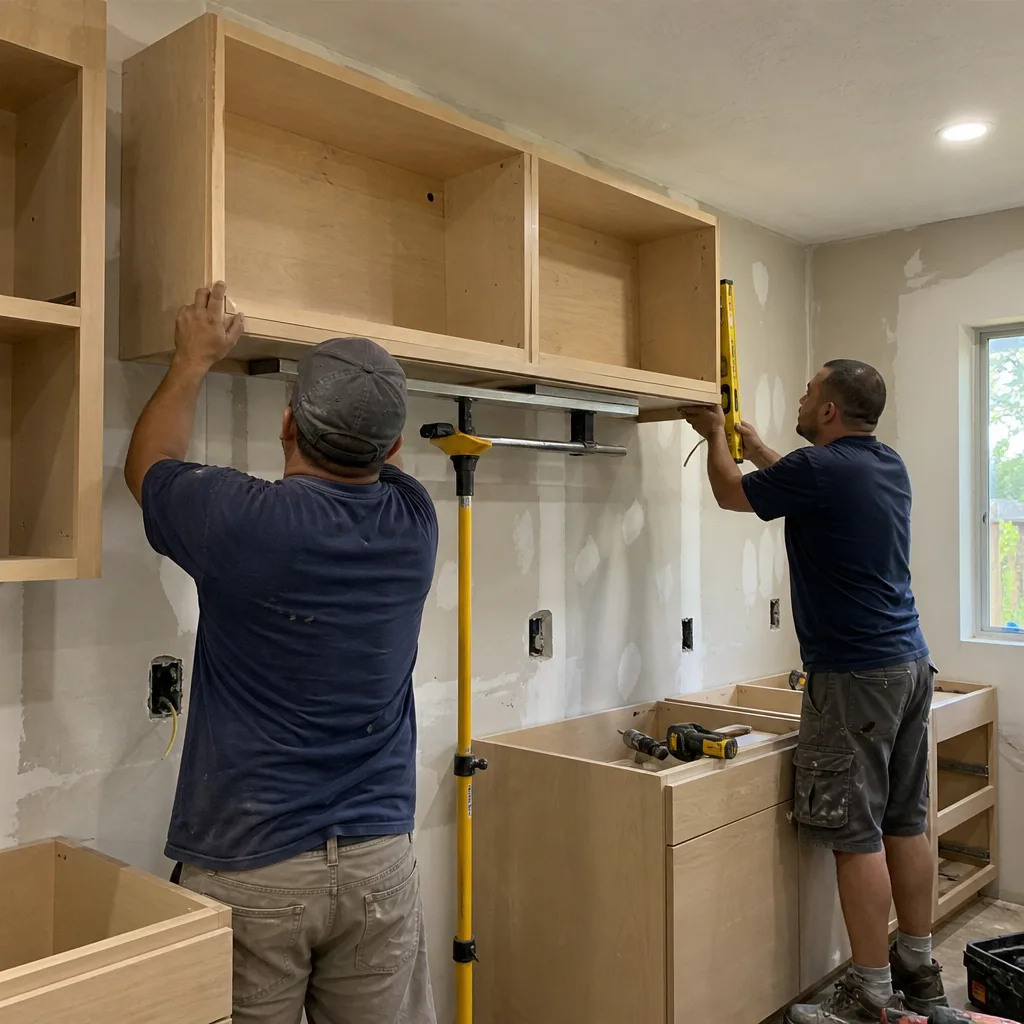
- Step 1: Verify the License Through DBPR
- Step 2: Confirm the Qualifying Agent Matches the Contract
- Step 3: Request and Verify Three Insurance Documents
- Step 4: Understand Florida Contract and Change-Order Law
- Step 5: Run the Six-Question Cost-Control Interview
- Pompano Beach-Specific Building Considerations
- Common Mistakes to Avoid
- When to Call a Professional
- Frequently Asked Questions
 Before
 After
AfterStep 1: Verify the License Through DBPR
The Department of Business and Professional Regulation maintains a public license lookup at myfloridalicense.com. Every legitimate contractor in Pompano Beach must appear in this database. The lookup is free, requires no account, and takes under two minutes if you know what to look for.
How to Run the Lookup
- Navigate to the DBPR License Search portal.
- Enter the contractor’s license number or business name. If the contractor only gives you a business name and resists providing a number, stop. That is the first red flag.
- Review the license status. It must read “Current/Active”. “Inactive,” “Expired,” or “Probation” means no work can legally proceed.
- Check the expiration date. Florida construction licenses expire August 31 of even-numbered years (2024, 2026, 2028). A contractor working in Pompano Beach with a 2024 expiration in mid-2025 has already let it lapse.
- Click “View Details” and scroll to “Complaint History.” Multiple complaints, even if dismissed, warrant a conversation.
Reading the License Type Codes
Florida uses three-letter codes that define what a contractor can legally pull permits for. The code on the license must match the work you need:
- CBC (Certified Building Contractor): Residential and commercial building construction, including structural alterations. Can pull permits for kitchen remodeling in Pompano Beach, home additions, and most interior renovations.
- CGC (Certified General Contractor): Unlimited scope, including new construction, high-rise, and civil work. For most residential projects in Pompano Beach, this is more license than needed, but it is valid.
- CRC (Certified Roofing Contractor): Roofing only. A CRC cannot legally pull a permit for your kitchen remodel or window replacement. If your roofing project in Pompano Beach involves structural decking repair, the CRC may need to subcontract or partner with a CBC.
- Registered (county-level): Valid only in the specific county of registration. A contractor registered only in Miami-Dade cannot legally pull permits in Broward County.
We have seen homeowners in Pompano Beach sign contracts with CRC-licensed contractors for full-gut bathroom renovations, only to learn at permit submission that the license does not cover the scope. The DBPR lookup prevents this. Screenshot the results page. Email it to yourself. This is your first document.
Step 2: Confirm the Qualifying Agent Matches the Contract
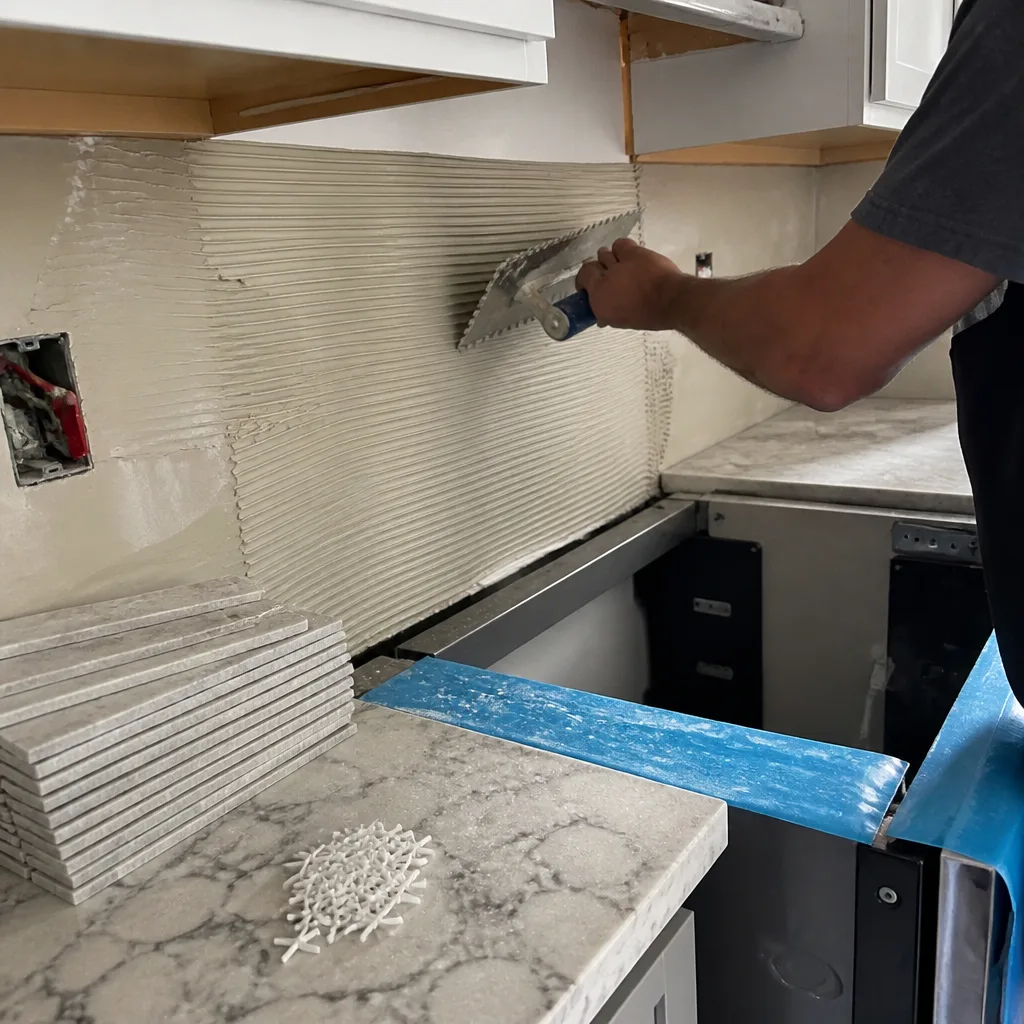
Florida operates under a “qualifying agent” system. A licensed individual, the qualifier, passes the state exam and attaches their license to a business entity. The company you sign with must be the same entity tied to that qualifier’s license. This is where fraud happens.
Here is the common scheme: A licensed qualifier allows their name to be used by multiple unaffiliated companies, or a company advertises under a name that sounds established but contracts under a different LLC with no license attachment. The homeowner pays a deposit to “ABC Construction of Pompano Beach,” but the qualifier is tied to “XYZ Builders LLC,” and when the project fails, ABC has no assets and no license to discipline.
How to Verify the Qualifying Agent
- On the DBPR detail page, note the “Business Name” field. This is the licensed entity.
- Compare it exactly to the business name on the contract, the estimate header, and the insurance certificate. “Rowan Construction Group” and “Rowan Construction Group LLC” match. “Rowan Construction” without “Group” does not.
- Ask the contractor directly: “Are you the qualifier, or is someone else?” If someone else, request the qualifier’s name and verify it independently in the DBPR system.
- Check whether the qualifier is listed as “Financially Responsible” or “Non-Financially Responsible.” A non-financially responsible qualifier has no monetary stake in the company and can walk away with minimal DBPR consequence.
In our experience across 4,000-plus projects, the companies that resist this verification step are the ones with something to hide. A legitimate contractor in Pompano Beach has run this check themselves and expects you to do the same.
Step 3: Request and Verify Three Insurance Documents
License verification confirms competence. Insurance verification confirms protection. Florida does not require contractors to carry general liability insurance by state law, but Broward County and most Pompano Beach permitting offices require proof of coverage for permit issuance. More importantly, without it, you are the insurer.
Document 1: Certificate of General Liability Insurance
Request a Certificate of Insurance (COI), not a policy declaration page. The COI is issued by the contractor’s insurance agent and shows active coverage. In Broward County, the minimum acceptable per-occurrence limit is $1 million, with an aggregate of $2 million for companies doing multiple concurrent projects. The certificate should name you as the “Certificate Holder” if work is imminent.
Verification call: Phone the insurance agent or carrier listed on the COI. Confirm the policy is active, the limits match the certificate, and the contractor’s business name matches the “Named Insured” field exactly. Ask specifically: “Has any notice of cancellation been issued?” We have encountered cases in Pompano Beach where a contractor presented a valid-appearing COI for a policy cancelled thirty days prior.
Document 2: Workers’ Compensation Certificate
Florida requires workers’ compensation for construction companies with one or more employees. The exemption for owner-operators is narrow and frequently misrepresented. If a worker is injured on your Pompano Beach property and the contractor lacks coverage, your homeowner’s policy becomes the primary target, and your policy may exclude commercial work.
Verification call: Contact the Division of Workers’ Compensation at (754) 714-6540 or use the online coverage verification tool. Enter the contractor’s FEIN or business name. Confirm active coverage for the dates your project will run. If the contractor claims exemption, request the Division-issued exemption certificate number and verify it independently.
Document 3: Surety Bond
Florida requires a $20,000 surety bond for certified contractors and varying amounts for registered county-level contractors. This bond does not protect you from poor workmanship; it protects you from financial loss if the contractor abandons the job or fails to pay subcontractors, who could then file a lien against your property.
Verification call: Phone the surety company listed on the bond certificate. Confirm the bond is active, the bond amount, and whether any claims have been paid or are pending. A bond with recent claims paid is a signal to investigate further.
File these three documents with your contract. Under Clause 1 of Rowan Construction Group Pompano Beach home operations, every customer receives current copies of all three before any deposit is collected.
Step 4: Understand Florida Contract and Change-Order Law
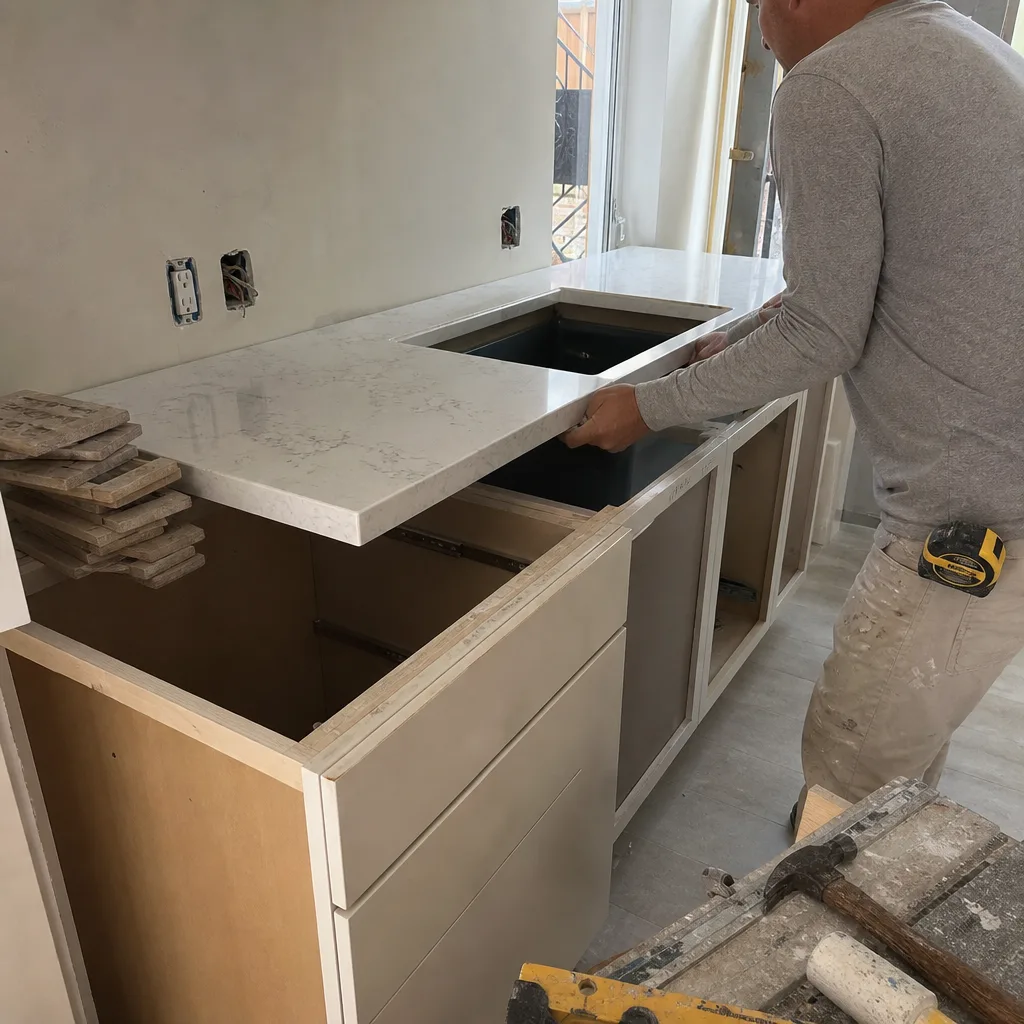
Florida Statute 489.126 governs residential construction contracts. Most homeowners in Pompano Beach have never read it. The statute contains specific protections that become meaningless if the contract violates them, and most complaints to the DBPR stem from change-order disputes that the statute was designed to prevent.
What the Statute Requires in Every Contract
- The contractor’s name, address, and license number
- A description of the work and materials, “sufficient for identification”
- The total contract price or a statement of how the price will be calculated
- The date work will begin and “substantial completion” estimated date
- A notice of the customer’s three-day right to cancel
A contract missing any of these elements is legally deficient. Do not sign it.
The Signed Change-Order Requirement
Section 489.126(1)(k) requires that any change to the contract scope or price must be in writing and signed by both parties before the changed work proceeds. This is not a best practice. It is the law. Verbal approvals, text message agreements, and “we’ll figure it out at the end” arrangements have no legal standing in Florida.
A legally compliant change order must contain:
- A description of the change and the reason for it
- The exact price adjustment, itemized if possible
- The effect on the completion date
- Signatures of both contractor and homeowner
- The date signed
At Rowan Construction Group, no work proceeds on a change until the change order is signed. This administrative discipline, acquired under The Haven Standard, is the reason our projects finish within a few percent of the agreed price. Homeowners who accept verbal change orders in Pompano Beach’s active renovation market frequently see final invoices 20-40% above the original contract.
Request a blank change-order form before signing the main contract. Review it. If the contractor does not use one, or if the form lacks signature lines for both parties, that is a structural problem with their process.
Step 5: Run the Six-Question Cost-Control Interview
Most interview guides ask about communication style and “vision.” Those questions surface personality, not process. The homeowners we serve in Pompano Beach, many of whom bought between 2015 and 2025 at peak prices, need to know how a contractor controls cost before they need to know how friendly the crew is. Run this script in your initial meeting. The answers will tell you more than any portfolio photo.
Question 1: “How do you handle material price increases between signing and delivery?”
Lumber, copper, and cabinet prices fluctuate. A contractor with a fixed-price contract should explain their material sourcing timeline and whether they lock pricing at contract signing. At Rowan, our written price includes a materials hold period; if prices move outside that window, the signed change order process applies. A contractor who says “we just eat it” is either lying or pricing so high that volatility is already built in. A contractor who says “you pay the difference, whatever it is” has no cost-control system.
Question 2: “Walk me through your subcontractor scheduling when a trade falls behind.”
In Pompano Beach’s construction market, drywall crews, electricians, and tile setters book two to four weeks out. Ask how the contractor sequences trades and what happens when one slips. Do they maintain relationships with multiple crews per trade? Do they carry backup subs at marginally higher rates to prevent cascade delays? The answer reveals whether they manage schedules or merely hope they hold.
Question 3: “What permit revision fees have you absorbed in the last year, and what caused them?”
Pompano Beach’s Building Department, like most in Broward, charges for plan revisions after initial permit issuance. A contractor who says “none” has either done very few projects or passes every revision cost to the homeowner. A contractor who can name a specific revision, explain why it happened, and describe how they adjusted their process to prevent recurrence is demonstrating institutional learning.
Question 4: “Show me your last three written quotes for projects similar to mine.”
You are not asking for customer contact information. You are asking to see the format. Is the scope itemized by trade and material? Are allowances specified in dollars or described as “TBD”? Does the quote include a written warranty terms section? A contractor who cannot produce three comparable quotes within 48 hours either lacks experience in your project type or does not document scope consistently.
Question 5: “What does your photo documentation include, and when do I receive it?”
Every visit should produce evidence. Ask whether photos are taken at arrival, during critical phases, and at departure; whether they include date stamps and location metadata; and whether the customer receives them automatically or must request them. Our standard at Rowan is a documented photo record on every visit, included, not optional. The customer leaves with evidence of what was found and what was done.
Question 6: “Under what conditions have you invoked your warranty, and what did it cover?”
A warranty that has never been invoked is either very new or very narrowly written. A contractor who can describe a specific warranty call, the failure mode, and the resolution is demonstrating that the warranty is a functioning system, not a marketing line. Our 365-Day Done Right Promise, backed by The Haven Standard, has been invoked and honored; the terms page is printed on every document, not referenced by asterisk.
Pompano Beach-Specific Building Considerations
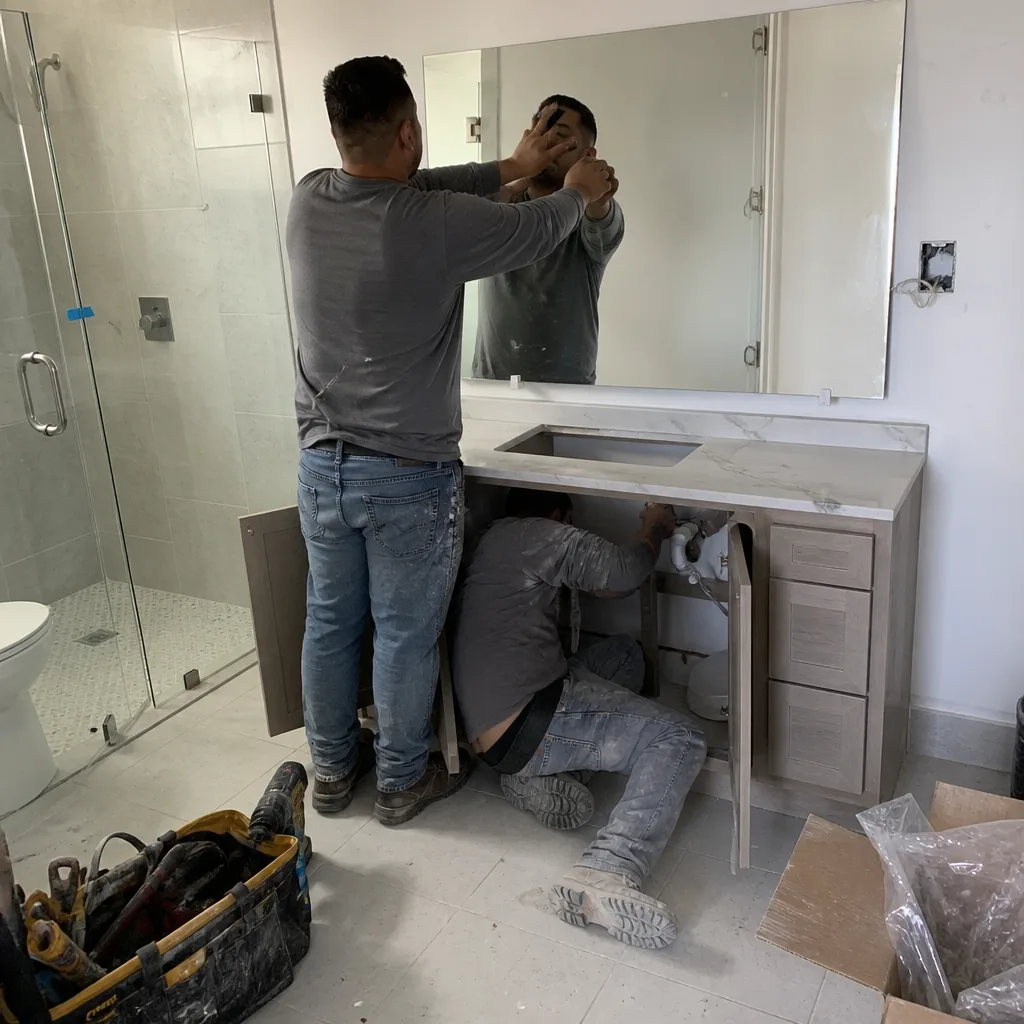
Pompano Beach’s location on the Atlantic coast creates construction conditions that inland Florida cities do not face. Hiring a contractor without local experience in these conditions is a risk that no license verification can eliminate.
Wind-Borne Debris Zones and Impact Ratings
Pompano Beach lies within the Broward County wind-borne debris region. Windows, exterior doors, and garage doors must meet Florida Product Approval or Miami-Dade NOA impact standards. A contractor quoting standard vinyl windows without mentioning HVHZ (High Velocity Hurricane Zone) requirements is either uninformed or planning to let you discover the compliance gap at inspection. For bathroom remodeling in Pompano Beach that includes exterior windows, or for any window replacement project, verify that specified products carry the proper approval number.
Salt-Air Material Specifications
The oceanfront and near-ocean neighborhoods, from Harbor Village north to Lauderdale-by-the-Sea, expose metal fasteners, flashing, and hardware to salt corrosion. Galvanized fasteners that suffice in Orlando fail prematurely here. Ask contractors about stainless steel or hot-dip galvanized specifications for exterior hardware. For roofing in Pompano Beach, this includes drip edge, valley flashing, and fastener selection for GAF or Owens Corning systems.
Soil and Drainage Conditions
Pompano Beach’s coastal ridge and flat interior create varying drainage conditions. In the Collier City and Cresthaven areas, seasonal high water tables affect foundation work and paver base preparation. For driveway and paver projects, Belgard and Techo-Bloc installations require specific base depth and permeability calculations that differ from inland Florida specs. A contractor who does not ask about your neighborhood’s drainage history has not built enough in Pompano Beach to know the variation.
Permit Turnaround and Inspection Scheduling
Pompano Beach’s Building Department currently processes residential permits with a stated goal of ten business days for complete applications. Incomplete applications cycle back, and the most common cause is mismatched license scope. A CBC pulling a roofing-only permit, or a CRC attempting a kitchen permit, triggers an automatic rejection. This is why Step 1, license verification, saves weeks, not just dollars.
Neighborhood Association Requirements
Several Pompano Beach communities, including sections of Palm Aire and Cypress Bend, maintain architectural review boards with additional documentation requirements beyond city code. A contractor who has worked in your specific neighborhood will know whether ARC approval must precede permit application. Ask directly: “Have you pulled permits in [your neighborhood name] before?”
Common Mistakes to Avoid
- Accepting a license number without running it. The DBPR lookup is free and takes two minutes. Homeowners who skip this step represent the majority of Broward County complaints.
- Confusing a business tax receipt with a contractor license. Pompano Beach issues business tax receipts to any registered business. It is not a construction competency credential and does not authorize permit pulling.
- Paying more than 10% or $1,000 as a deposit, whichever is less. Florida law caps residential construction deposits at this amount. A contractor requesting 25% or 50% upfront is either undercapitalized or operating outside statute.
- Signing a contract with blank fields. Every blank space is a future dispute. Completion dates, price fields, and scope descriptions must be filled before your signature goes on the page.
- Verifying insurance once and never again. Policies lapse. If your project runs six months, request updated COIs at 90-day intervals or at each draw payment.
- Hiring based on the lowest of three bids without scope comparison. A $28,000 kitchen quote and a $42,000 kitchen quote are not comparable until you itemize cabinet brand (KraftMaid vs. stock), countertop material (Cambria vs. laminate), and whether permit fees are included.
- Ignoring the qualifying agent mismatch. The company name on your contract must match the DBPR-licensed entity exactly. “Doing business as” names without proper registration are common in Pompano Beach and create enforcement gaps.
When to Call a Professional
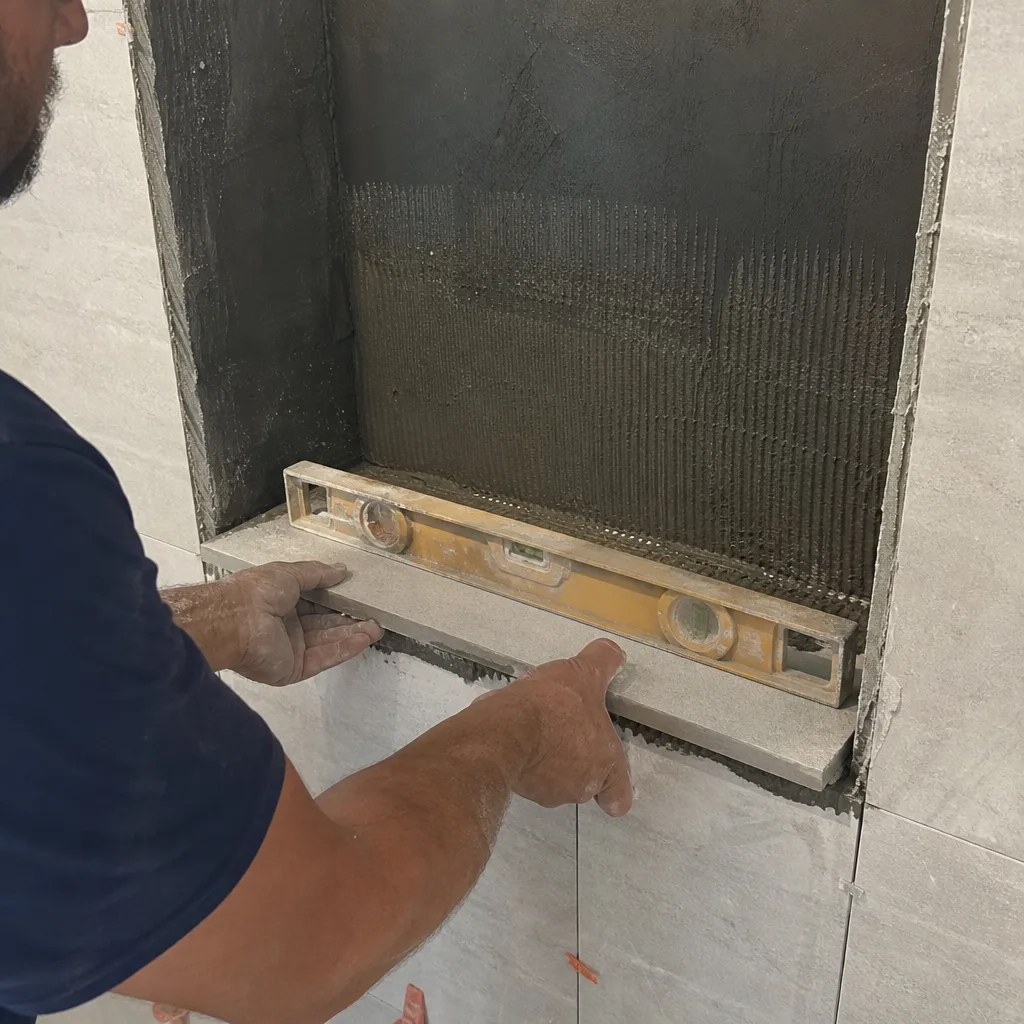
Certain project types in Pompano Beach trigger requirements that make DIY or unlicensed work legally impossible and financially dangerous. Any project requiring a building permit, which includes structural modifications, electrical or plumbing work, roof replacement, and window replacement in HVHZ zones, must use a licensed contractor. Attempting to pull a homeowner’s permit for work you do not intend to perform yourself, a common workaround suggestion, violates Florida statute and voids most insurance coverage.
Projects involving load-bearing wall removal, foundation repair, or second-story additions require engineering stamps and specialized structural knowledge. The cost of professional remediation after a failed DIY attempt typically exceeds the original contractor quote by 40-60%.
Rowan Construction Group Pompano Beach offers free estimates in Pompano Beach. Call (754) 714-6540 to schedule a walk-through, receive a written price before any work starts, and bring any competitor’s written estimate for a free second-opinion review, line by line.
Frequently Asked Questions
Project costs vary by scope, but typical ranges in the Pompano Beach market include $18,000-$45,000 for a full kitchen remodel with mid-grade cabinetry, $12,000-$28,000 for a bathroom renovation with tile shower and Kohler or Toto fixtures, and $350-$550 per square foot for a home addition or ADU including foundation, framing, and weather-in. Roofing replacement on a typical 2,000-square-foot home runs $12,000-$22,000 depending on shingle brand and decking condition. Call (754) 714-6540 for an exact quote on your specific project, estimates are free.
Visit myfloridalicense.com, enter the license number or business name, and verify the status reads “Current/Active.” Confirm the license type code matches your project scope, CBC for general building, CGC for unlimited general, CRC for roofing only. Screenshot the results. This verification takes under two minutes and is the single most effective fraud prevention step available to homeowners.
Request three documents: a Certificate of General Liability Insurance with minimum $1 million per occurrence, a Workers’ Compensation certificate or valid exemption, and a surety bond certificate. Call each issuer to confirm active status. Broward County permitting offices require general liability proof for permit issuance, and your homeowner’s policy may exclude claims if the contractor lacks proper coverage.
Only through a signed change order that both parties execute before the changed work begins, per Florida Statute 489.126. Verbal approvals, text agreements, and “we’ll settle up later” arrangements are not legally enforceable. At Rowan Construction Group, no work proceeds on a change until the change order is signed, this is the discipline that keeps projects within a few percent of the agreed price.
Complete residential permit applications in Pompano Beach typically process within ten business days if the license scope matches the project type and all required documentation is included. Incomplete applications, mismatched license codes, or missing insurance certificates trigger automatic rejection and restart the timeline. Working with a contractor who has submitted complete applications in your neighborhood before reduces this risk.
A qualifying agent is the licensed individual who passes Florida’s construction exam and attaches their license to a business entity. The company you contract with must be the exact entity tied to that qualifier’s license. Mismatches between the contract name and the DBPR-listed business name are a common fraud vector in South Florida. Verify the match before signing.
The Bottom Line
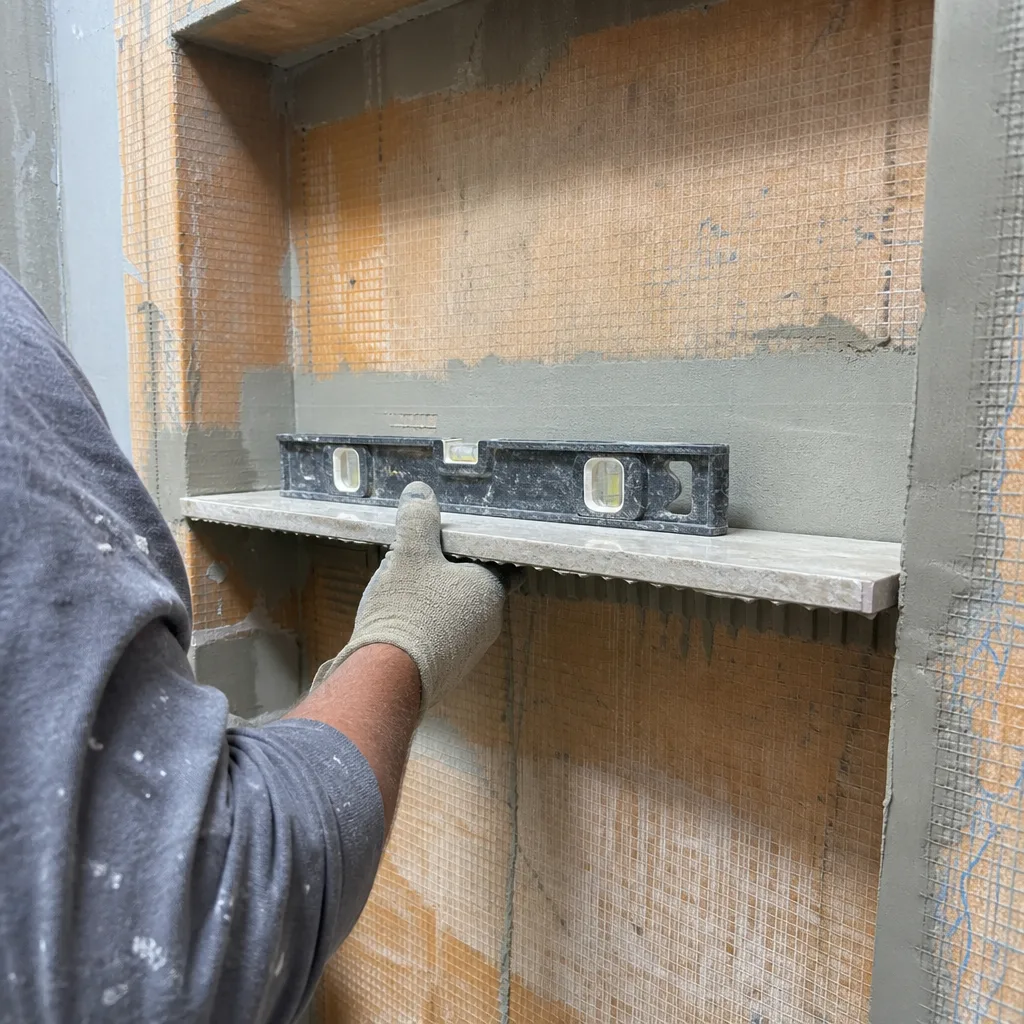
Hiring a construction contractor in Pompano Beach is a document-verification process that happens before personality enters the equation. Run the DBPR license lookup, confirm the qualifying agent matches your contract, request and verify three insurance certificates, review the contract against Florida Statute 489.126 requirements, and conduct the six-question cost-control interview. These steps take under thirty minutes and eliminate the majority of complaints that Broward County homeowners file each year. The contractors who welcome this verification are the ones with systems worth hiring. The ones who resist it have already told you what you need to know.
Written by Grant Rowan, Owner at Rowan Construction Group Pompano Beach, serving Pompano Beach since 2007.