
Free written scope consultation - allowances, timeline, and change-order rules on paper before a single trade is scheduled
 Before
 After
After Before
 After
After Before
 After
AfterAbodu Home Additions & ADU: The Pompano Beach Owner’s Guide
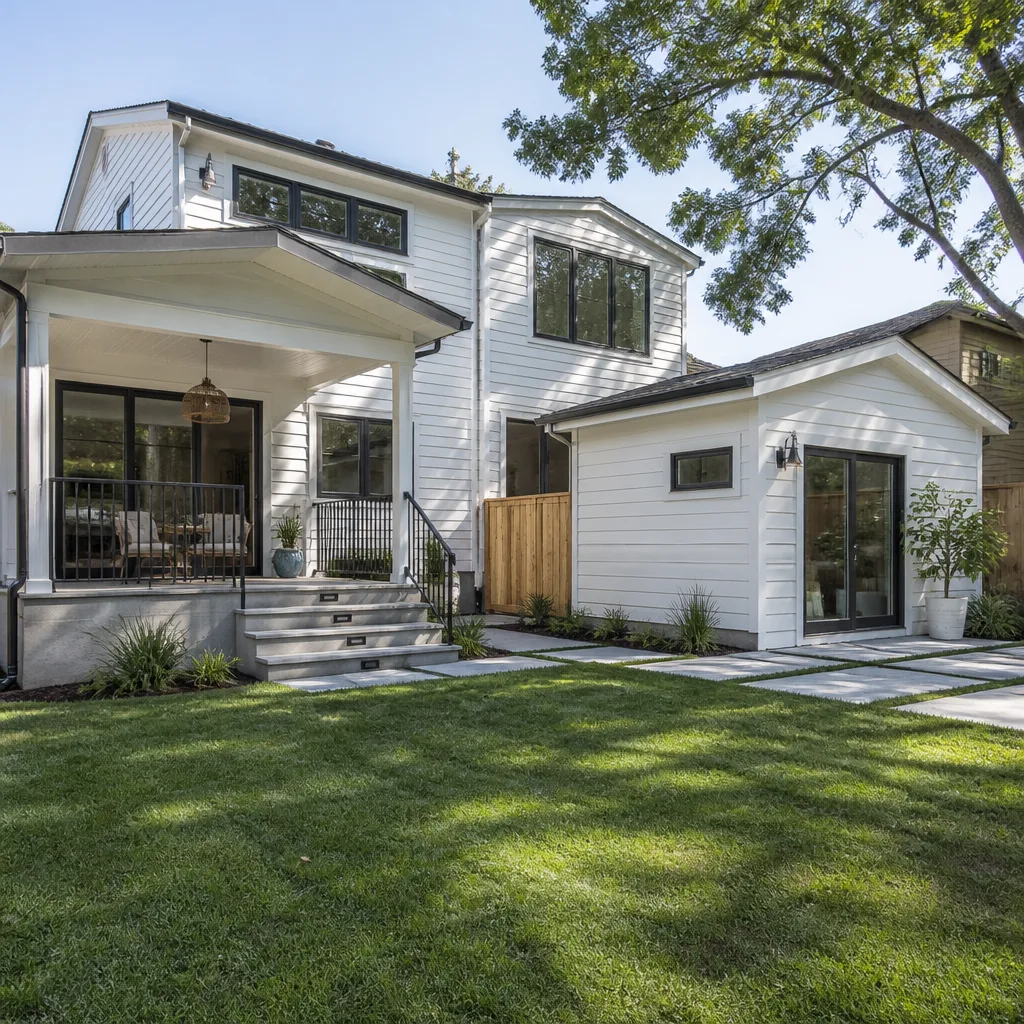
Abodu home additions and ADU units in Pompano Beach typically run $45,000-$130,000 for a complete addition, or $90,000-$220,000 for a standalone ADU, depending on foundation work, utility tie-ins, and whether you’re matching an existing roofline. We stock and install Abodu-compatible structural components, connector hardware, and weather-sealing systems for the One and Two series units, with most replacement parts available within 48 hours through our network of fifty-plus vetted suppliers. Most Pompano Beach owners first notice a problem when the unit’s exterior panel seams start gaping after our summer humidity cycles, or when the integrated HVAC struggles to keep up after a few years of salt-air exposure.
Which Abodu Models This Applies To
Abodu currently ships two residential lines: the One, a 340-square-foot studio, and the Two, a 540-square-foot one-bedroom. Both use a steel moment-frame chassis with factory-applied ZIP System sheathing and a proprietary flashing kit at the roof-to-wall junction. The model number is stamped on a metal tag inside the electrical panel door, formatted as AB1-XXXX or AB2-XXXX with a four-digit production week code.
The critical compatibility point for Pompano Beach is the foundation connection. Abodu specifies a raised pier foundation for most sites, but Broward County’s flood zone requirements often push us toward a stem-wall or slab-on-grade adaptation. The bolt pattern on the chassis anchor brackets changed slightly in 2021 production; pre-2021 units use 5/8-inch diameter anchors on 24-inch centers, while 2021 and later use the same diameter but on 16-inch centers with an additional seismic tie-down bracket. We keep both hardware kits on hand because roughly half the Abodu units we’ve serviced in Pompano Beach were installed during the 2019-2020 rush when accessory dwelling unit rules first loosened.
On OEM versus aftermarket: Abodu sells replacement flashing kits and sealant profiles direct, but their lead time is typically three to four weeks. We source equivalent ZIP System tape, Vycor Plus flashing, and custom-bent aluminum drip edges from our regular suppliers that match Abodu’s specs exactly, documented with manufacturer data sheets. The warranty stays intact because we’re matching, not improvising.
Signs Your Abodu Home Additions & ADU Is Failing
- Panel seams opening at the ZIP System joints. Pompano Beach’s afternoon thunderstorms drive water behind any compromised tape. We see this most on west-facing walls where thermal expansion cycles are hardest. The underlying cause is usually tape degradation at the sheathing seams, not the panels themselves.
- HVAC short-cycling or failing to reach set temperature. Abodu units ship with a Mitsubishi mini-split sized for mild California climates. In Pompano Beach, that same unit runs harder, longer, and the condensate line clogs faster with our airborne salt and pollen mix. The compressor isn’t dead; it’s often just underserviced and overworked.
- Soft spots or discoloration at the floor-wall junction. This is the one that costs real money. The factory sill gasket compresses over time, and our sandy soils let moisture wick up through the pier foundation. By the time you see staining, the bottom plate of the steel frame is usually surface-rusting.
- Doors or windows binding in their frames. Abodu uses high-quality Sierra Pacific windows, but the steel chassis flexes differently than a wood-framed house. In Pompano Beach’s flat, flood-prone lots, subtle foundation settlement throws the frame out of square. The window isn’t defective; the opening is.
- Musty smell developing in the bathroom or kitchenette. The compact footprint means every cubic foot of air gets recirculated. If the ERV (energy recovery ventilator) intake filter is clogged, which happens fast near the beach, humidity accumulates in the wall cavity behind the wet-area tile. We find mold on the backside of cement board more often than owners expect.
 Before
 After
AfterReplacement Cost & What’s Included
For a typical Abodu repair or component replacement in Pompano Beach, here’s how the numbers break:
| Scope | Price Range |
|---|---|
| Flashing/sealant replacement (full envelope) | $3,500-$7,500 |
| Foundation anchor hardware upgrade | $2,000-$4,500 |
| HVAC replacement or upsizing | $4,500-$9,000 |
| Floor plate remediation and sill seal | $5,500-$12,000 |
| Complete window/door realignment | $2,500-$6,000 |
| ERV unit replacement with duct cleaning | $3,000-$5,500 |
The wide ranges reflect what we find once we open the wall or crawl the pier foundation. A flashing job stays at the low end if the ZIP System sheathing underneath is sound; it jumps if we find saturated OSB that needs panel replacement. Under Clause 1 of the Haven Standard, you get the written price before we touch a tool, and no change proceeds without a signed change order. Every repair carries our 365-Day Done Right Promise and a documented photo record of before, during, and after.
DIY or Call Us?
There’s a clear line here. An owner can safely check the ERV filter, clear the mini-split condensate line with a wet-dry vac, and confirm the model tag inside the electrical panel. These take twenty minutes and a flashlight.
Everything else crosses into work that affects the structural warranty, the weather barrier, or the flood insurance documentation. Re-taping ZIP System seams looks simple but requires a specific roller pressure and temperature range; done wrong, you trap moisture instead of shedding it. Foundation anchor work involves torque-specified bolts and, on some Pompano Beach sites, working around active termite treatment zones. And any wall opening means sequencing the flashing layers in the right order, which is where water intrusion starts nine times out of ten.
We carry Abodu-compatible flashing kits, anchor hardware for both pre- and post-2021 chassis, and the specific sealant profiles on our trucks. Call (754) 714-6540 and we’ll schedule a free estimate with a written scope and price before any work starts.
FAQs
With proper maintenance, the steel chassis and ZIP System envelope should last 50 years, but the wearable components need attention sooner. The exterior sealant cycle is 7-10 years in our UV and salt-air environment, and the mini-split typically needs replacement at 12-15 years versus 20 in a drier climate. Call (754) 714-6540 for a condition assessment - estimates are free.
Sometimes. A localized flashing failure can be patched if caught early, but we won’t patch over saturated sheathing because it traps rot. We show you the moisture meter readings and the photo record, then quote both repair and replacement options with the price for each in writing. Call (754) 714-6540 to schedule.
Most component replacements finish in two to four working days. A full envelope re-flash runs five to seven days, plus a 24-hour cure period for the sealants before we sign off. We sequence tightly - Grant’s old habit from the Old Town gut-renovations - so no crew sits idle waiting on materials. Call (754) 714-6540 for scheduling.
We stock the common failure items: both foundation anchor kits, compatible flashing and sealant profiles, and ERV replacement units. Abodu-specific trim pieces or pre-2019 hardware ship from their San Jose warehouse in three to four weeks, but we usually source equivalent-grade materials faster through our regular suppliers. Call (754) 714-6540 and we’ll confirm availability for your model and production week.
Rowan Construction Group Pompano Beach is an independent service provider and is not affiliated with Abodu. We also stock and install parts for KraftMaid, Cambria, and Silestone products.
Written by Grant Rowan, Owner, Rowan Construction Group Pompano Beach at Rowan Construction Group Pompano Beach, serving Pompano Beach and nearby areas.